Based in
Easton, PA
I keep fleets of solar sites producing, build things that probably didn't need building, and spend the rest of it outside.
01 — Overview
I grew up on a turkey farm in Bucks County, Pennsylvania, which is where the fixing started. On a farm nothing gets replaced if it can be repaired, so you learn to weld, wire, and improvise before you learn to drive — and then you learn to keep the cars running too. I got my private pilot's license at 17 and figured out pretty quickly that I liked taking the plane apart more than flying it.
LeTourneau University for mechanical engineering technology, then a first job as a field engineer in solar manufacturing: building, troubleshooting, and commissioning large vacuum furnaces. A chance conversation with someone from a solar O&M company pulled me out of the factory and into the field, and I never went back. Troubleshooting and repairs at first, then leading a team across a portfolio of sites, then field operations, then commissioning.
Today I run operations and maintenance for hundreds of commercial solar sites — employees, contractors, commissioning, site walks, repairs. Everything after a site is built is mine.
02 — Away
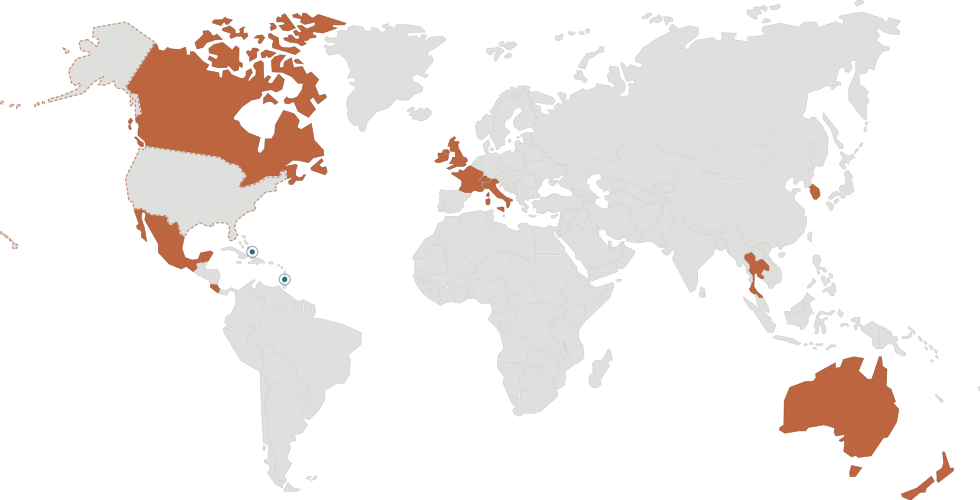
Fifteen-plus countries so far, and I plan the trips the way I do everything else — obsessively, and never through a resort. Some of it has been exploring: Slovenia and the Istrian coast, Venice and Trieste, St. Lucia, aspen country out west in the fall. Some of it has been work — mission trips, building churches, showing up with tools somewhere they were needed. A semester abroad at the University of Southern Queensland in Australia is where the habit started. The good days are always the ones we figured out ourselves.
Closer to home I grow vegetables, bake more bread than two people reasonably need, and do CrossFit. I'm training for a marathon this November, which mostly means I've become insufferable about cadence.
03 — Work
Most people picture solar as panels sitting quietly in the sun. In practice it's hundreds of sites, a lot of driving, a lot of thermal imaging, and the occasional transformer that decided to cook its own neutral. Once a site is built and energized, it's mine — through commissioning, then for the rest of its life.
The part I like is the detective work. A monitoring platform will tell you production is down four percent. It will not tell you why. Finding out why usually means standing on a roof somewhere with a meter — and I'd rather be doing that than sitting in a meeting about it.
Preventive maintenance programs, service scheduling, and field crews across a distributed portfolio.
Startup, punchlist, and pre-substantial-completion inspection on new commercial PV.
Production analysis and fault triage — cutting through false positives to find real underperformance.
Inverters, MLPE, transformers, protective relaying. Root cause, not symptom.
The gap I keep circling: monitoring platforms are built to report status, not to diagnose. Closing the distance between the data and the actual broken component is the interesting problem in this industry.
04 — Projects
In between everything else I've started small companies, always for the same reason: something in my own life was annoying and nobody had fixed it. The Shake Library existed because I was done with thirty-serving tubs and shaker bottles. CanClamp exists because my trash can kept blowing down the street — the first attempt was a magnet, a saw blade and some 2x4s, which was terrible, and several versions later it's manufactured, packaged, and something people actually buy.
The rest follows the same pattern, and most of it starts in CAD. I model in Fusion 360 and Rhino, print a version that doesn't work, print four more, and end up with the part. Brackets, jigs, fixtures, replacement pieces for things the manufacturer stopped making. The printer has paid for itself several times over in things I refused to buy. There's a rucking pack in progress too — a plate sleeve that holds the weight high and flat against your back instead of letting it sag into your lumbar, which is what every cheap weighted pack gets wrong.
I also fly. Part 107 certified, and I run thermal drone flights over solar sites — a radiometric camera at a couple hundred feet finds a hot diode, a failed string, or a cracked cell faster than a technician can walk the rows, and the imagery goes straight into the work order.
My first house was condemned when I bought it. No kitchen — not a bad kitchen, no kitchen. I took it from that to fully finished myself, one room at a time, with a lot of YouTube and a lot of figuring it out on the spot: demo, framing, electrical, plumbing, drywall, subway tile around a cast iron tub, a set of exterior stairs rebuilt from the stringers up.
Doing it yourself means every job takes twice as long and teaches you something you couldn't have read about. Tile was the surprise. Setting it is patience, not skill — the whole job is decided before the first tile goes on, in how flat you got the wall.
05 — Contact
Solar operations, 3D printing, home automation, or where to find a decent loaf in the Lehigh Valley.